
217 words
1 minute
L3akctf 2025 | Beneath the Surface
On the surface, this signal is nothing but meaningless noise — a mere whisper of the wind. But dive deeper into this transmission, and a storm begins to take shape, with gray skies gathering on the horizon. Can you navigate through the static and uncover what lurks beneath the surface of the wav — before it’s too late?
File
DownloadSolution
exiftool beneath_the_surface.wavExifTool Version Number : 13.30File Name : beneath_the_surface.wavDirectory : .File Size : 6.3 MBFile Modification Date/Time : 2025:07:13 12:40:18+02:00File Access Date/Time : 2025:07:13 12:40:19+02:00File Inode Change Date/Time : 2025:07:13 12:40:18+02:00File Permissions : -rw-r--r--File Type : WAVFile Type Extension : wavMIME Type : audio/x-wavEncoding : Microsoft PCMNum Channels : 1Sample Rate : 8000Avg Bytes Per Sec : 16000Bits Per Sample : 16Title : Generated audioSoftware : fldigi-4.2.07 (libsndfile-1.0.28)Comment : WEFAX576 freq=14011.900Date Created : 2025:07:11T10:21:36zDuration : 0:06:35The Software and Comment fields are useful, these indicate that the audio file was generated by fldigi which contains a WEFAX (Weather Facsimile) image, transmitted at 576 lines at a frequenct of 14011.900 kHz.
So, I install fldigi with yay -S fldigi (I use Arch, btw). Open the program and go to Op mode -> WEFAX -> WEFAX576, and then, on the main window, set the frequency to 14011.9 kHz. Now, upload the file on File -> Audio -> Reproduction.
Please be patient and wait for the program to decode the entire audio and get the flag.
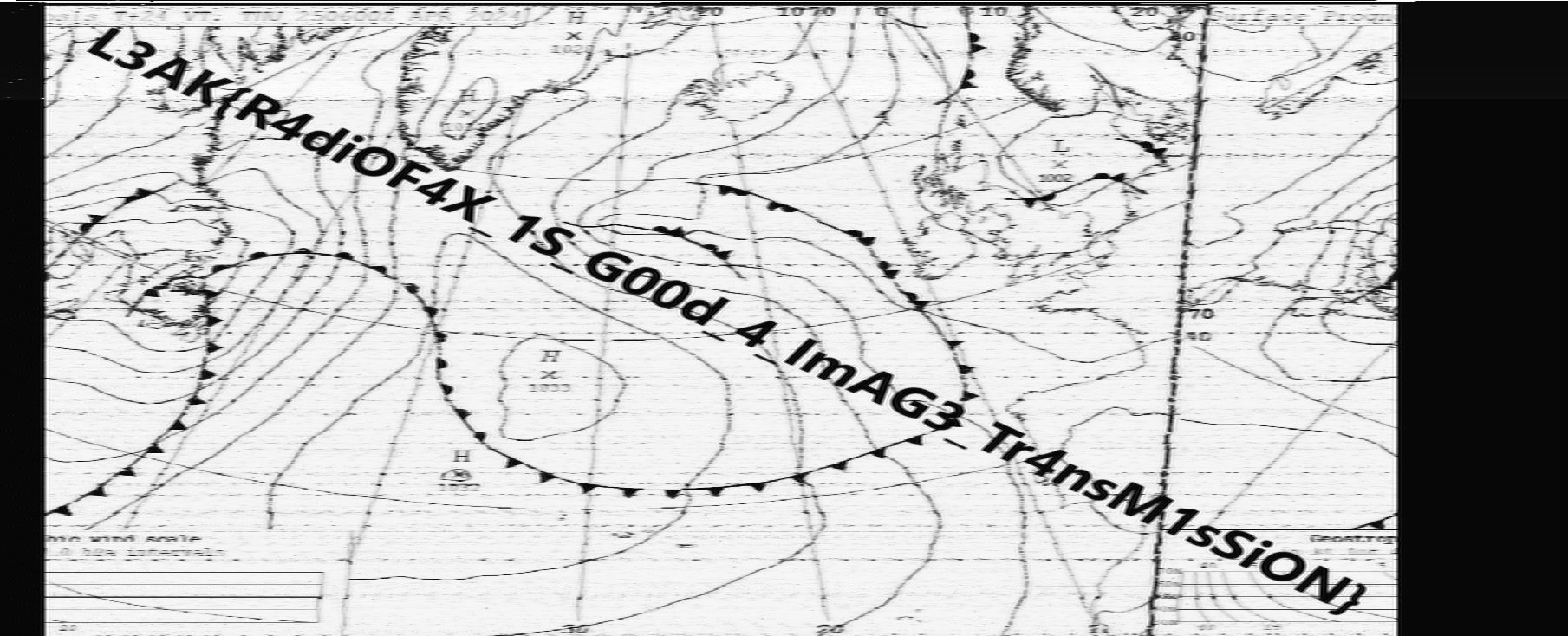
flag:
L3akctf 2025 | Beneath the Surface
https://bytethecookies.org/posts/l3akctf2025-beneath-the-surface/